


1. Local (On‑Premises)
With a local or on‑premises solution, all computers, servers, and networks are managed directly on the company’s premises. This means:
Control:
You have full control over your hardware and software.
Security:
Security depends entirely on how well your own protection measures are implemented.
Costs:
Significant upfront investments are required to purchase and maintain the necessary equipment.
Accessibility:
Access to data and applications is usually only possible on‑site unless additional remote‑access solutions are implemented.
2. Cloud
With a cloud solution, data and applications are stored in data centers managed by an external provider. This means:
Flexibility:
You can access your data from anywhere with an internet connection.
Scalability:
It is easy to add more storage or resources whenever needed.
Costs:
Pricing is often based on actual usage rather than high initial costs.
Maintenance:
The provider handles maintenance, updates, and infrastructure management.
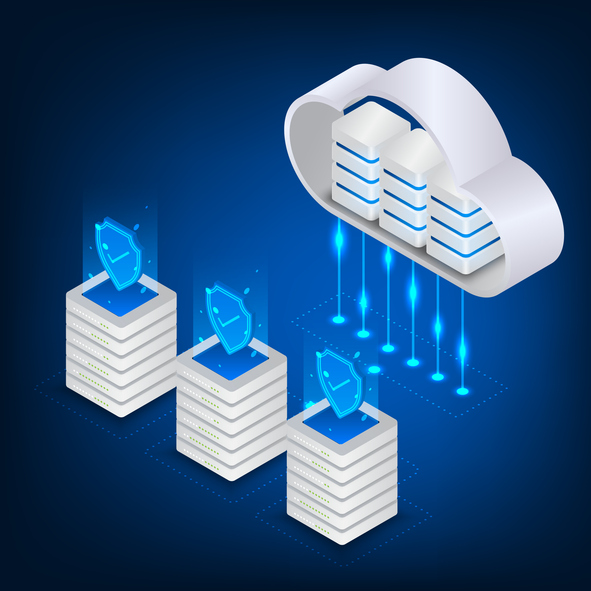
Hybrid
A hybrid environment combines elements of both local and cloud systems. This means:
Flexibility and Control:
You can decide which data or applications remain on‑premises and which are stored in the cloud — based on factors such as security, cost, and accessibility.
Optimization:
You can take advantage of both worlds — for example, keeping sensitive data on local servers while using the cloud for less critical data or applications.
Complexity:
Managing a hybrid environment can be more complex, as it requires integration and coordination between both infrastructures.
